Brand News
How Levi's, Heinz, and Gillette Turned a FIFA Ban Into Free Advertising
The short answer
FIFA’s World Cup 2026 “clean stadium” policy forced non-sponsor brands to hide their names and logos at host venues. Levi’s, Heinz, and Gillette responded by turning the censorship itself into the campaign — covering their own branding in ways that drew more attention than the logos would have on their own. This is a textbook case of ambush marketing: gaining exposure tied to a major event without paying for official sponsorship rights.
What FIFA’s “clean stadium” policy actually requires
FIFA’s clean stadium policy bans visible branding from any company that isn’t an official tournament sponsor at World Cup venues. Stadiums named after non-sponsor companies had to operate under temporary names for the tournament. Levi’s Stadium in Santa Clara became “San Francisco Bay Area Stadium.” Gillette Stadium in Foxborough and Mercedes-Benz Stadium in Atlanta faced the same requirement.
The policy exists to protect the value FIFA sells to official sponsors, who pay for exclusive category rights during the tournament. Source: Stobbs, FIFA World Cup 2026 and Ambush Marketing
How Levi’s responded
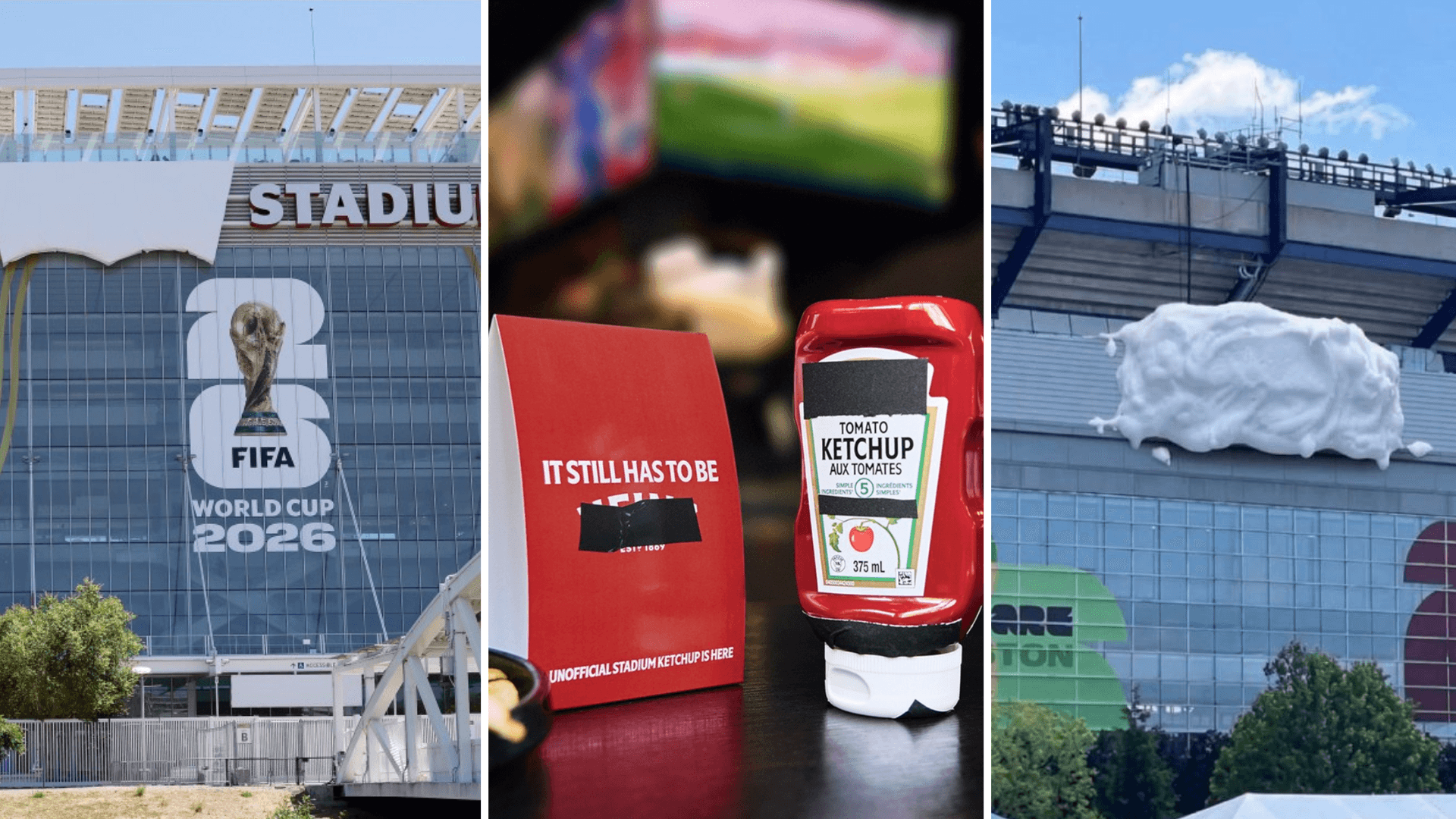
Levi’s covered the Levi’s Stadium signage with a white tarp, cut to leave the exact outline of the company’s “Batwing” logo visible. The name disappeared. The shape didn’t.
Levi’s extended the joke beyond the stadium. The company covered the Red Tab — the small fabric trademark on the back pocket of every pair of Levi’s jeans — with a plain white patch. It then repeated the white-tarp treatment on storefronts in eight countries, including the UAE, France, the UK, Mexico, and Brazil. Source: DesignRush, FIFA’s Logo Rule Backfires, WWD, Levi’s Plays Into Viral FIFA Stadium Branding Controversy
How Gillette responded
Gillette Stadium covered its exterior signage with fake foam shaped to resemble shaving cream, turning the censorship requirement into a direct visual joke about the brand’s own product category. Source: AOL, Levi’s, Heinz, Gillette take advantage of FIFA logo rules
How Heinz responded
Inside stadiums and media areas, Heinz ketchup bottles had their labels covered with black tape to comply with the non-sponsor branding ban. Heinz leaned into it, releasing a limited “FIFA-friendly” ketchup bottle design built around the black-tape look, alongside packaging reading “It still has to be Heinz.” Source: HITC, Heinz pokes fun at FIFA’s ‘clean stadium’ World Cup policy
The one exemption FIFA granted
Mercedes-Benz Stadium’s exterior logos were covered with FIFA branding for the tournament. The giant three-pointed star mounted on the stadium roof stayed visible. FIFA granted an exemption after months of negotiation, on the grounds that removing or concealing the structure risked damaging the stadium’s retractable roof system. Source: Yahoo Sports, Here’s why SoFi, Gillette and Mercedes-Benz stadiums have different names
Why this counts as ambush marketing, not just a clever stunt
Ambush marketing is the practice of gaining exposure from a major event without paying for the official sponsorship rights tied to it. Official sponsors pay FIFA directly for category exclusivity. Levi’s, Heinz, and Gillette paid nothing for World Cup association and still generated significant media coverage and public attention during the tournament, using FIFA’s own enforcement action as the mechanism. Source: Campaign Asia, How brands hijacked FIFA’s logo ban
FAQ
What is FIFA’s clean stadium policy?
A rule requiring World Cup host venues to remove or cover any branding from companies that are not official FIFA tournament sponsors, protecting the exclusivity FIFA sells to paying sponsors.
Why did Levi’s Stadium have a different name during the World Cup?
FIFA’s clean stadium policy required the venue to operate under a temporary name, “San Francisco Bay Area Stadium,” because Levi’s is not an official tournament sponsor.
What did Levi’s do instead of removing its logo?
Levi’s covered its stadium signage with a white tarp cut to the outline of its Batwing logo, covered the Red Tab on its jeans with a white patch, and repeated the tarp treatment on storefronts in eight countries.
Is this legal under FIFA’s rules?
Covering a venue’s own signage to comply with the ban is permitted. The companies didn’t display new branding; they altered their own existing signage in a way that still drew public attention, which sits in a legal gray area FIFA actively monitors each tournament.
What is ambush marketing?
A marketing strategy where a brand gains exposure associated with a major event without paying for official sponsorship rights.


